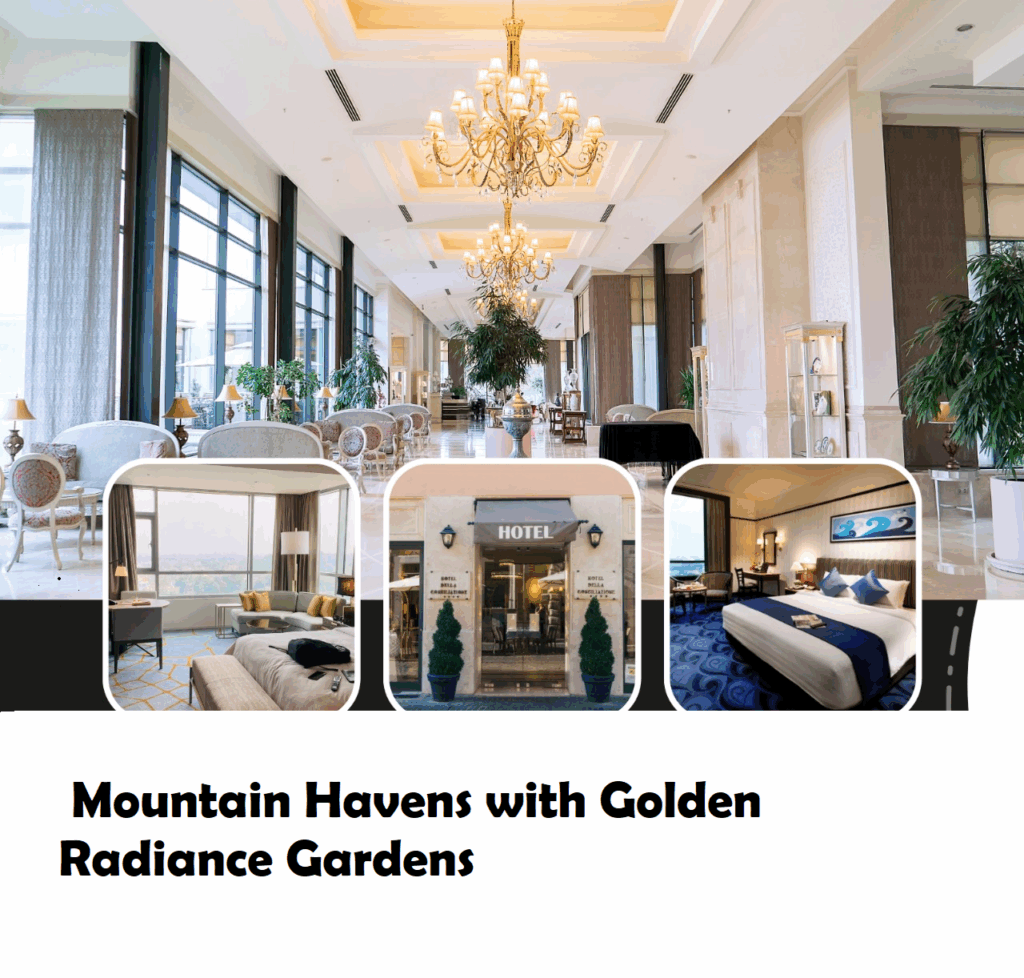
The phrase “Mountain Havens with Golden Radiance Gardens” conjures a world where the horizon glows like molten honey and the air smells of pine, tea leaves, and fresh stone. Picture alpine courtyards designed for light: terraces angled to catch first sun, lantern nooks that turn amber at dusk, and reflective pools that hold the last shimmer of evening. These are sanctuaries that pair altitude with artistry—places where morning birdsong mingles with the hush of cedar, where paths lined with wildflowers guide you to pavilions for slow breakfasts and even slower sunsets. In these havens, gold is not only a color; it’s a tempo, a mood, and a way of being.
Dawn Pavilions: Where Light Arrives First
At daybreak, the gardens feel like a private prelude. Frost-kissed grasses release their scent as stone steps warm beneath the rising sun. A pavilion waits at the edge of the slope, framed by timber beams and climbing jasmine. Here, breakfast is a ritual—local honey, oven-warm bread, and mountain berries—while the valley below exhales a veil of mist. The architecture is quiet and precise: low walls for uninterrupted vistas, pale wood that amplifies the glow, and soft textiles that feel like sunlight on skin. It’s a place to read, to journal, to watch the ridge-lines turn from silver to gold.
Lantern Walks at Dusk: The Garden Afterglow
When the day leans into evening, pathways come alive with amber lanterns and discreet ground lights tucked beneath fern fronds. A slow amble reveals intimate pauses: a stone bench under a larch tree; a water rill that mirrors fading skies; a tucked-away firepit whose flames echo lantern light. This is where conversations stretch, slippers shuffle, and glasses ring with local sparkling wine. In the golden afterglow, stories feel warmer, laughter settles deeper, and time seems to swell—an hour can drift into two without notice.
Thermal Corners and Scented Steam
Many mountain estates add the alchemy of warm mineral water to their golden gardens. Imagine a cedar-sided onsen or hillside soaking pool edged with basalt, steam lifting like silk as cranes of cloud move across the peaks. Set beside these pools are “thermal corners”—sheltered niches with heated loungers, aromatherapy bowls of cypress or juniper, and a small tea service waiting under a brass cloche. Step from hot mineral water into crisp air, wrap yourself in a robe that’s pre-warmed by the hearth, and let the garden’s glow finish the therapy the springs began.
Tea Terraces and Alpine Tables
As noon softens, golden gardens slide into an edible rhythm. Tea terraces layer the slope—first flush brews poured into clay cups, floral infusions paired with mountain honey cake, artisan cheeses served with apricot preserves. Outdoor tables are set with linen runners the color of wheat and stoneware plates hand-thrown by local potters. Herbs—lemon verbena, mountain thyme, calendula—border the paths and garnish the plates, adding both perfume and palette to the meal. Nothing is hurried. Plates arrive when the light is right.
Quiet Craft: Design That Holds the Sun
The signature of these havens is craft that honors light: brass hardware that warms with touch, butter-soft leather on window seats, woven rugs that catch late sun in their fibers. Garden walls curve to cradle warmth; pergolas are slatted to paint the ground in shifting sun-stripes. Even the color story is intentional—oat, flax, oatmilk white, and candle-gold—so that the landscape remains the headline and the architecture, the perfect frame.
Q&A: Planning Your Golden Garden Escape
Q: What kind of traveler will love these mountain havens?
A: Couples and solo seekers who value quiet luxury and sensory detail—light, texture, and scent—over spectacle. Photographers, writers, and slow-food enthusiasts will feel particularly at home.
Q: When is the best time to go?
A: Late spring to early autumn offers long, golden evenings and blooming herb borders. In winter, the glow becomes cocooning—think lamplight on snow and steam rising from hillside baths.
Q: How do these gardens differ from typical alpine resorts?
A: Instead of ski-first design, the focus is light-first design. Garden rooms, thermal corners, and tea terraces prioritize slowness, warmth, and horizon watching.
Q: Any destination ideas to match the mood?
A: Consider refined alpine stays where gardens are part of the narrative: tranquil sanctuaries in the Swiss Alps near lake-rim trails; craft-forward retreats in Japan’s highlands with cedar baths and tea rituals; Bhutanese lodges that pair pine forests with meditative courtyards; or Italian Dolomite estates where herb gardens roll down to sunlit meadows. For specific inspirations with a similar spirit, travelers often look to properties like Bürgenstock (Switzerland), Hoshinoya Karuizawa (Japan), Six Senses Bhutan, or intimate Dolomite farmstead-hotels that celebrate seasonal cuisine.
Q: What experiences should I not miss?
A: A lantern walk at blue hour, a mineral soak as the mountains turn rose-gold, a garden breakfast timed to sunrise, and a guided foraging stroll that ends with herbal tea on a sunlit bench.
Conclusion: Where Light Becomes a Luxury
“Mountain Havens with Golden Radiance Gardens” is more than a beautiful phrase—it’s a promise of time well-held. Here, the day is edited for glow: mornings arrive with clarity, afternoons hum with flavor, and evenings close like a velvet curtain of light. These sanctuaries offer an exclusive experience not through ostentation, but through orchestration—the meticulous alignment of architecture, landscape, and sun. Come for the views, stay for the golden hours, and leave with a new pace written into your bones. In these gardens, the real luxury is luminous time—and there is nothing more exclusive than that.